Content Strategy
SEO Content
Blog Writing
Article Writing
E-commerce Content
Copywriting
Content Strategy Services
Content strategy and content plans that ship, rank, and convert.
Learn more >
Hundreds of businesses trust Fellocraft with their content strategy needs.


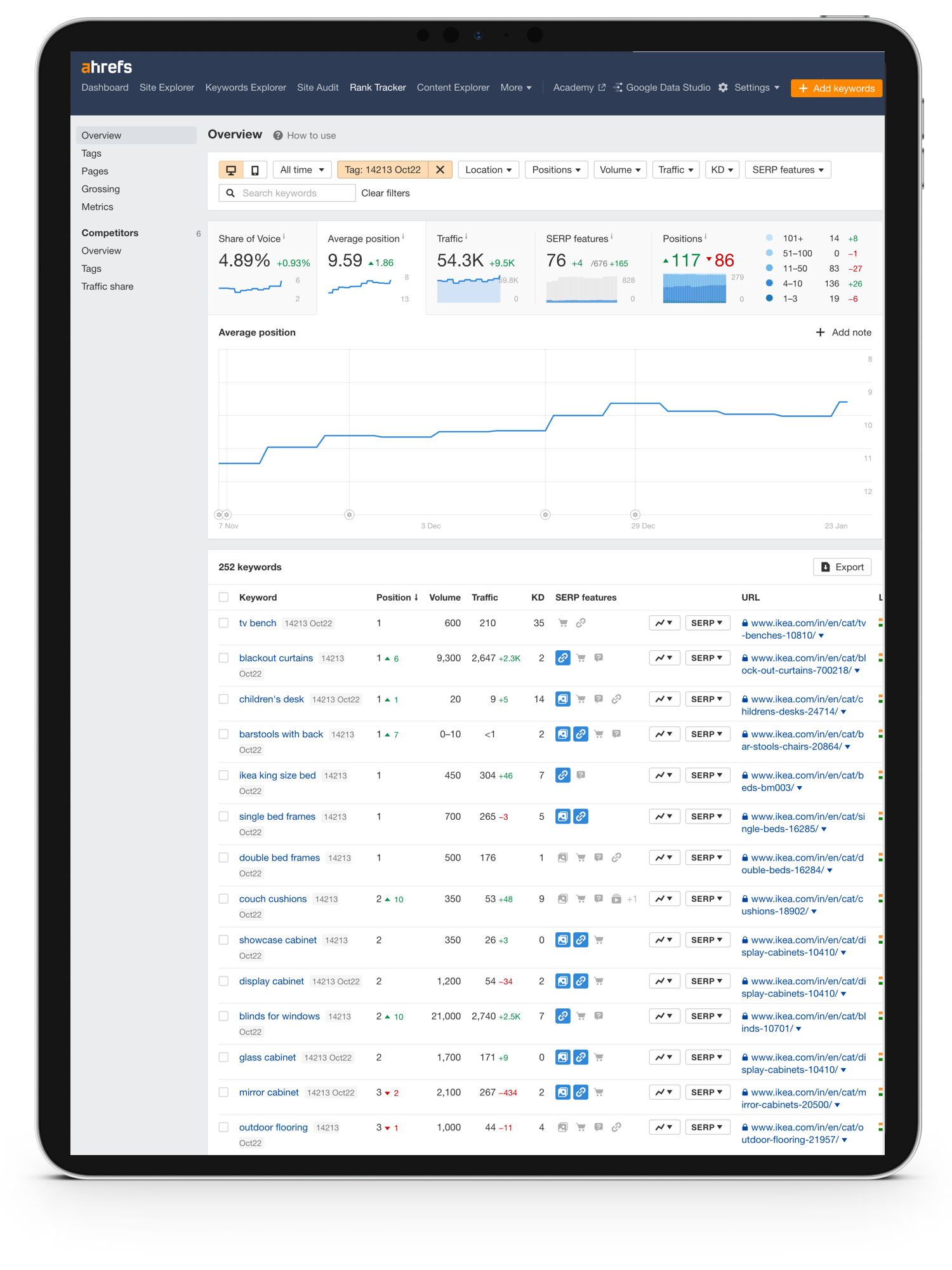
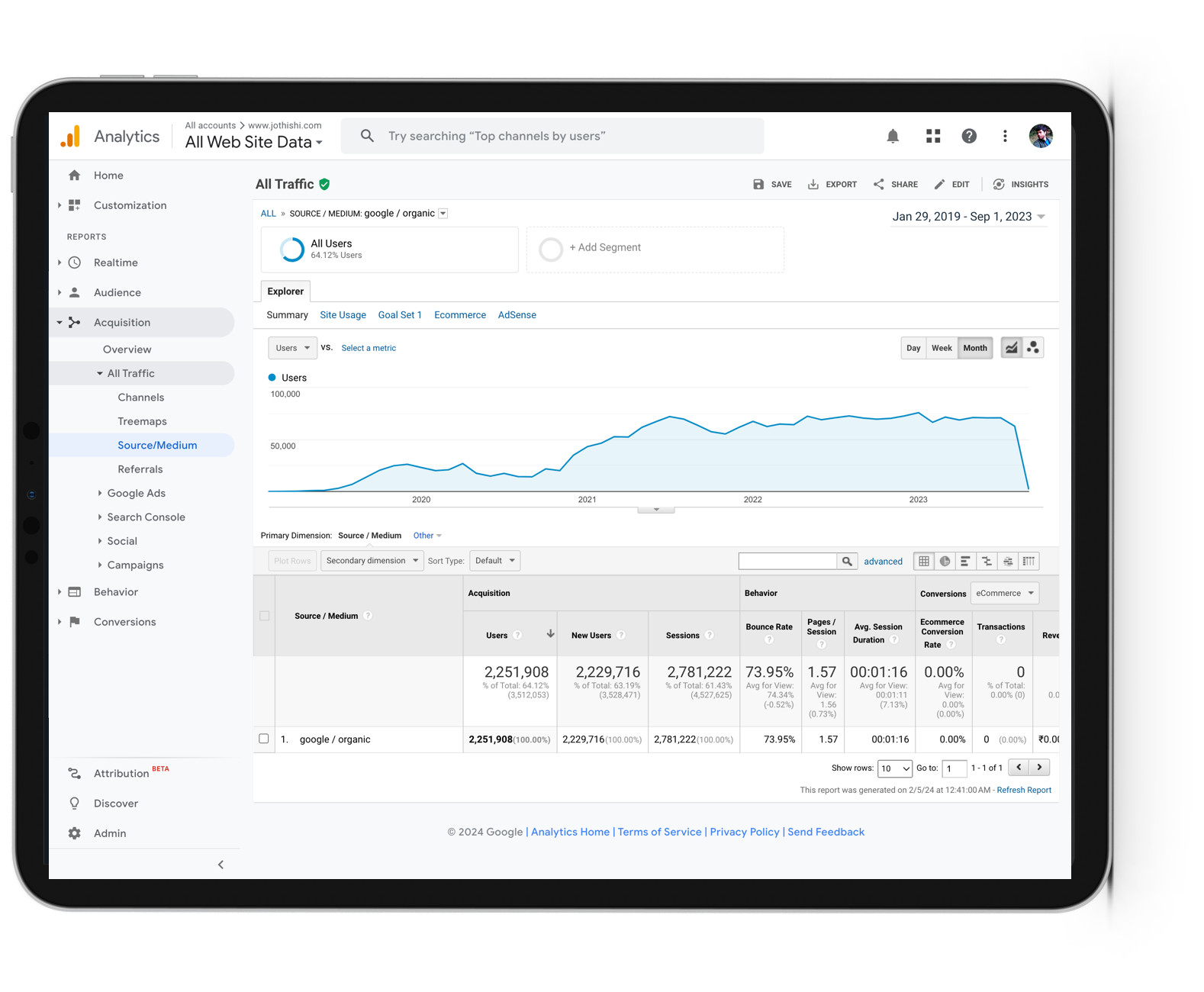
*Images show data from analytics of real SEO content campaigns carried out by Fellocraft.
Content strategies designed to rank, convert, and grow your business

A content strategy is the blueprint – and the content plan – that guides how a business plans, creates, publishes, and manages content to achieve measurable marketing results.
A good content plan defines the essential components of a content strategy: what content a business should create, who it is for, where it should be published, and how it will achieve specific business goals. These elements of content strategy turn content from a marketing cost into a measurable growth lever.
Instead of creating content randomly, a content strategy ensures that every article, page, video, or social post serves a clear purpose, such as driving traffic, generating leads, building authority, or supporting sales.
Why hire Fellocraft’s content strategy services?
Fellocraft brings more than 20 years of business experience in content strategy and writing – we’ve been helping businesses scale with our content strategy services since 2006.
Clear Direction for Your Content
Our content strategy service provides a clear content strategy roadmap for what to create, when to publish, and where to distribute content. This ensures every piece of content aligns with your business goals.
Higher Search Engine Visibility
Our SEO and content strategy work focuses on keyword research, topic clusters, and SEO optimisation, helping your content rank higher on search engines and attract more organic traffic. Whether you’re starting from zero or creating a content strategy for SEO that has to compete in a crowded category, we’re built for it.
Lead Generation and Conversions
Fellocraft’s strategic content effortlessly guides users through the customer journey — from awareness to consideration to purchase, turning visitors into leads and customers.
Data-Driven Content Decisions
Our content strategy services use analytics, performance tracking, and user behaviour insights to refine and improve your content over time.
Choosing the right content strategy – our methodology
No two businesses need the same content strategy frameworks. We diagnose six factors first, then recommend the right mix — whether that means a pure SEO-led approach, an editorial content strategy, or a hybrid. No templates.
Category maturity
Mature category or emerging one? Established verticals need topical authority, and BOFU plays. New categories need glossary and definitional content. We pick based on where your category actually is.
Competitive intensity
We audit the top 20 results for your priority keywords. Then we tell you which ones you can win in 6 months, which need 18, and which to skip entirely.
Intent distribution
Every category splits differently across informational, comparison, and commercial search intent. We map the split, then weight your strategy toward where the buyers actually are.
Your existing content equity
Got 200 blog posts already? We’ll audit, prune, and reclaim before we add. No content equity yet? We’ll build the architecture from zero. The right move depends on what you’ve got.
Time-to-revenue requirements
Need leads in 90 days or building a 3-year moat? Fast-payback strategies look nothing like long-term plays. We pick to match your timeline, not ours.
Vertical considerations
Insurance, lending, healthcare, real estate, fintech, travel — each has unique SERP behaviour, regulatory limits, and buyer journeys. We’ve built content systems across all six. Your strategy reflects what works in your specific industry.
Six basic content strategies we deploy
Each of these is a working strategy we’ve shipped — not a slide. Think of them as a content strategy toolkit. We pick one as the lead play, then layer the others in. Every option is an organic content strategy at heart — built to compound traffic over years, not buy it in a quarter.
Our Content Strategy Deliverables
Most “content strategy” engagements end with a slide deck. Ours end with six working documents your team can act on from day one. Here’s exactly what gets handed over.
Content audit report
A complete content audit — also called a content strategy audit or website content audit, depending on scope. Every existing page on your site graded for traffic, rankings, conversions, and decay. Pages to keep, prune, merge, or refresh — flagged with priority. We deliver it as a working website content audit checklist your team can execute against, with content audit for SEO recommendations on each row. The roadmap to reclaiming traffic you’ve already paid for from any web content audit you’ve never acted on.
Keyword architecture and URL plan
Your entire keyword universe mapped — head terms, middle, long-tail — and matched to URLs. New pages, existing pages, redirects. No more guessing what to publish next or where it should live.
Hub-and-spoke topical map
The visual blueprint of your content architecture. Which pillar pages anchor your category. Which spokes feed each pillar. How internal links flow. Built in a format your team can implement and your developers can wireframe from.
Persona and buyer journey doc
Who you’re writing for, what they search at each stage, and what content moves them to the next. Built from real SERP behaviour and intent data, not workshop guesses.
Editorial calendar with content briefs
An editorial calendar built for 6 to 12 months of publishing, ranked by priority. Each piece comes with a brief — target keyword, search intent, suggested structure, internal links, word count. Hand it to your writers or ours. Zero friction.
Measurement framework
The KPIs that matter for your strategy. Attribution model. Reporting cadence. Dashboards to track. So you know exactly what success looks like — and when to expect it.
Case Studies
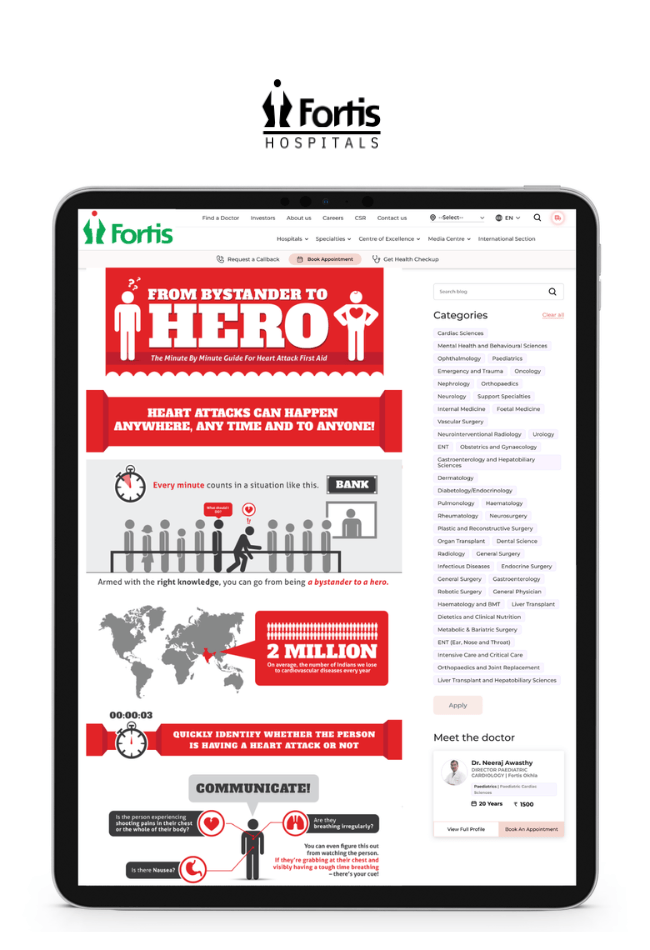
Content strategy and writing for NarayanaHealth.org
We created a pillar content strategy across different medical conditions that spanned the specialty medical services offered by Narayana, like Heart attacks/Heart surgery. We wrote and created medical and SEO content for all of these once the strategy was approved. The blogs were heavily in-linked to each other within each cluster. The content was hosted on Narayana Health’s blog and website. We also created an SEO strategy for their doctor profiles and hospital locations across India. This significantly boosted their local SEO results.
- Pillar page strategy for Medical Conditions
- Location-based Local SEO strategy for hospital locations across India
- Wrote long-form SEO Keyword-optimised blog content
- Scaled across all medical conditions/surgeries/hospital specialities
- Edited/proofread for tone, grammar and consistency
- Six-month engagement
- Weekly delivery cycles
- Strong uptick in patient and enquiry traffic
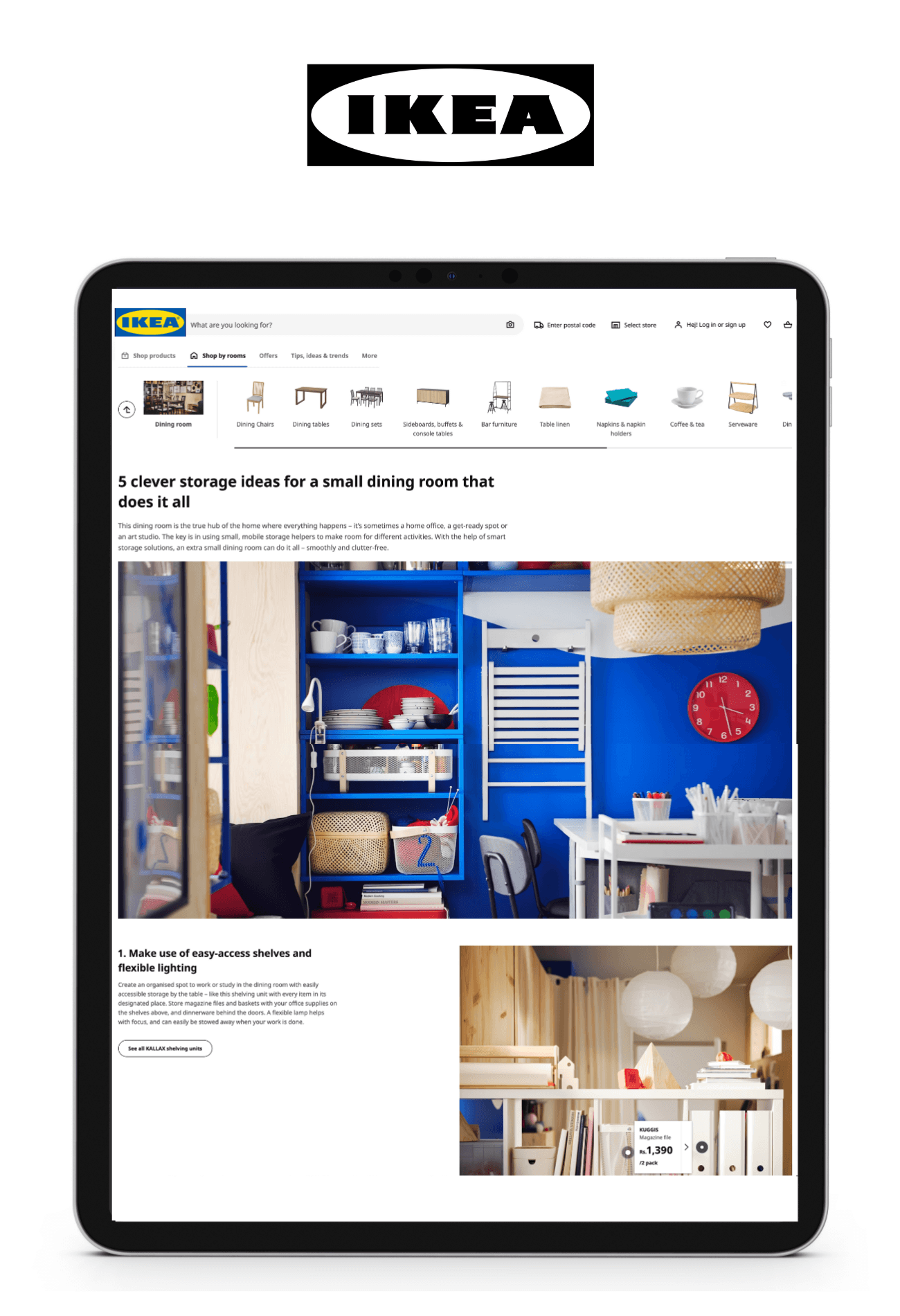
Content strategy + Blog + Category page writing for IKEA.com/in/en/
We created a category-based and blog-based strategy for IKEA India. IKEA already had a high DR, so all we had to do was target the entire keyword landscape across furniture and cluster them across different categories and subcategories on their site. We followed it up by writing category and subcategory page content at multiple intervals. We also optimised for Local SEO every time they had a new store launch in a city.
- Category, Sub category and Blog content strategies
- Wrote SEO Keyword optimised category page content + Blog content
- Scaled across all furniture-related terms in India
- Edited/proofread for tone, grammar and consistency
- Monthly delivery cycles
- Four-year engagement
- Strong uptick in furniture-related traffic, and buyers for the brand new ecommerce site
Content Strategy + Creation for Jothishi.com
We crafted an extensive, month-on-month, SEO Keyword and Editorial Strategy for Jothishi.com right from the early days when the product was fresh out of development. We then created content and published it on their site to steadily and surely raise traffic over the next six months to an all-time high.
- SEO Editorial keyword strategy covering Astrology search landscape in-depth
- SEO Keyword optimised blog page content
- Scaled across all astrology-related terms in India and globally
- Edited/proofread for tone, grammar and consistency
- Weekly delivery cycles + CMS Publishing
- Two-year engagement
- Strong uptick in astrology-related traffic and an increase in users of the product
- An extensive number of do-follow backlinks, all natural and organic, across the site to our content
You’ve got company.
AVP Marketing, Quikr.com
Fellocraft created a comprehensive content and editorial strategy for Quikr's Education product. We used Fellocraft's strategy right from pre-launch and we gained traction on search traffic thanks to their well thought out strategy. Kudos!

Smita Kedia
We hired Fellocraft to create a content strategy for Bluestone in our early days. It was helpful in driving traffic to our buying guides and category pages.

Gaurav Khushwaha
CEO, Bluestone.com
Founder, Jothishi.com
Neil and the Fellocraft team worked with us right from our launch. They came up with a detailed SEO strategy and implemented it themselves by creating and publishing the content. We saw a massive spike in traffic after six months. Lots of incoming links too. Fellocraft continued to support us on content and strategy intermittently over two years. I highly recommend them to any product team for marketing and strategy.

Anand Vadakepat
We’re Live On:


Content strategy services pricing & engagement

Our content writing prices begin at ₹2 per word
Content Strategy Sprint
Starting at ₹1,50,000 (one-time)
A complete strategy engagement in ~4 weeks. You get all six deliverables:
-audit
-keyword architecture
-hub-and-spoke map
-persona doc
-editorial calendar
-measurement framework
Walk away with a roadmap your team can execute. Ideal for brands that want content strategy only, or want to test working with us before committing to a retainer.
Order Now
Strategy + Execution Retainer
Starting at ₹1,25,000 / month
Includes
-full strategy sprint upfront
-ongoing content production
-hub-and-spoke build-out
-internal linking
-quarterly strategy reviews
You get a dedicated team that plans and ships. Built for brands that want one partner handling both the strategy and the execution, with monthly output scaled to your goals.
Order Now
Enterprise Build
Custom pricing
(~₹2,50,000+ / month)
The full content architecture build:
– multi-vertical strategy
– hub plus multiple spokes
– original research
– data assets
– AI-search-ready content
– end-to-end execution.
This is what we built for our insurance, lending, and healthcare verticals. Designed for category leaders ready to own their space online for years.
Order Now
📦 Per-project
One-off scoped work — fixed cost, defined deliverable.
🔄 Monthly Retainers
Fixed budgets for ongoing programmes.
🏢 Custom Project
Large-scale projects for Enterprise customers.
Order Now.
Get a response within 4 business hours. Free sample B2C article available on request.
" Always, the proof of the pudding is in the eating " - Miguel de Cervantes, Don Quixote (1605)
FAQs
What are content strategy services?
Content strategy services involve planning, creating, managing, and optimising content to achieve specific business goals. This includes audience research, keyword planning, content calendars, and performance tracking.
What is included in your content strategy services?
Typically, Fellocraft's content strategy services include:
-
Audience and competitor research
-
Keyword and SEO planning
-
Content calendar creation
-
Topic ideation and mapping
-
Content funnel strategy
-
Performance tracking and optimization
How is a content strategy different from content writing?
Content writing focuses on creating individual pieces of content, while a content strategy defines what to create, why, when, and for whom—ensuring every piece contributes to your business goals.
How long does it take to develop a content strategy?
A comprehensive content strategy usually takes 2–6 weeks, depending on the scope, research depth, and business complexity.
Do you also execute the content strategy?
Yes, we can handle both strategy and execution, including content creation, optimisation, and ongoing performance tracking.
What industries do you provide content strategy services for?
Content strategy can be tailored for almost any industry, including SaaS, healthcare, e-commerce, finance, education, and more.
Do you offer content strategy for small businesses and startups?
Yes. Our content strategy for small businesses and content strategy for startups engagements are scoped tighter and priced more accessibly than enterprise builds. A small business content marketing strategy typically starts with a Sprint engagement — six working deliverables in four weeks — that gives founders a roadmap they can execute themselves or hand to a freelancer. Startup briefs often emphasise BOFU-first commercial SEO to compress time-to-revenue.
How is a B2B website content strategy different from a B2C one?
A B2B website content strategy is built around longer buying cycles, higher-intent search behaviour, and bottom-of-funnel commercial keywords ("X vs Y," "best X for [use case]," pricing pages). An inbound marketing content strategy or inbound content strategy framework adds gated assets and nurture flows. We map the B2B journey from problem-aware to vendor-evaluation to decision, and weight your content accordingly.
What's a long term content strategy — and what makes content evergreen?
A long term content strategy is built to compound over 18-36 months, not 90 days. An evergreen content strategy specifically targets queries with stable search demand — definitional pieces, how-to guides, comparison content — that earn traffic for years rather than weeks. Most of our enterprise engagements blend evergreen content with quarterly refreshes to keep rankings durable.
Where does content strategy fit in digital marketing?
Content strategy in digital marketing is the planning layer that sits above SEO, paid media, email, and social. Without a content strategy, those channels operate independently and waste budget on overlapping or contradictory messaging. A content strategy 101 framework defines the content strategy steps — audit, audience, keyword architecture, editorial calendar, measurement — and ties every channel back to a single content plan. We've also built dedicated product content strategy and homepage content strategy work for clients who need a specific surface area solved.
The complete guide to content strategy services: frameworks, deliverables, and how it actually works
Most “content strategy” engagements in India end with a slide deck. Ours don’t — and the difference shows up six months later in your traffic graphs, not in the slide count. This guide is a working walkthrough of what content strategy services actually do, the frameworks we deploy, the deliverables you should expect, and where it fits in digital marketing alongside SEO, paid media, email, and social.
Treat this as content strategy 101 for buyers. If you’ve never bought a content strategy engagement before, the vocabulary alone is intimidating. By the end of this you’ll know exactly what to ask for — and what to walk away from.
What is a content strategy — the essential components
A content strategy is the plan that defines what content you publish, who it’s for, where it lives, and how it earns measurable business outcomes. A content plan is the operational layer underneath — the calendar, the topics, the priorities. Most teams conflate the two. Strategy without a plan is theory. A plan without a strategy is busywork.
The essential components of a content strategy — and the elements of content strategy that every working engagement covers — are:
- Audience and intent. Who you’re writing for and what they search at each buying stage.
- Keyword architecture. The complete map of head, middle, and long-tail terms — matched to pages.
- Topical authority structure. Pillar pages, spoke pages, and the internal links between them.
- Content production calendar. A 6-12 month editorial calendar with prioritised briefs.
- Measurement and attribution. The KPIs that prove the strategy is working.
The elements of content strategy described in most agency decks stop at “voice” and “personas.” Both matter — but neither moves rankings on their own. A working content strategy roadmap covers the five above as a minimum, and the content strategy steps follow that sequence: audit first, then audience, then architecture, then calendar, then measurement.
Content strategy frameworks — the toolkit we actually deploy
Generic “we’ll build a content strategy” pitches mean the agency has one playbook. Real content strategy frameworks are situation-specific — we pick the framework that matches your category maturity, competitive intensity, and time-to-revenue requirements.
Our content strategy toolkit includes the six frameworks below, plus another fifty-plus variations we deploy regularly for clients across insurance, lending, healthcare, real estate, fintech, and travel. Most engagements use two or three frameworks layered together. Each one is an organic content strategy at heart — built to compound traffic over years, not buy it in a quarter.
Here’s how the six headline frameworks work in detail.
1. Hub-and-spoke topical authority
The pillar page anchors the category — a long, comprehensive resource on the head term (e.g. “Health Insurance in India”). Spoke pages cover sub-topics in depth (“Best Health Insurance for Senior Citizens,” “Cashless Health Insurance Explained,” “How to Compare Health Insurance Plans”). Internal links flow both ways: every spoke links up to the pillar, and the pillar links down to every spoke. Over 6-12 months, Google reads the cluster as topical authority and your pillar starts ranking for the head term while your spokes capture mid-funnel and long-tail traffic.
Where it works best: categories where buyers research extensively before purchase — insurance, lending, healthcare, real estate, B2B SaaS. We built this exact structure for Narayana Health, creating a pillar page architecture for their healthcare marketing presence with spokes mapped to clinical specialties, patient personas, and procedural intent queries.
2. BOFU-first commercial SEO
Skip the awareness stage entirely. Target high-intent buyer queries first — “best X,” “X alternatives,” “X vs Y,” “X pricing,” “X reviews.” These queries have lower search volume than top-of-funnel terms but the buyers are 10x closer to converting. The framework cuts time-to-revenue from 12 months to 3 by capturing shoppers who are ready to buy, not just browse.
Where it works best: brands with limited content runway who need leads in 90 days. SaaS companies launching in crowded categories. Lending and insurance brands competing against aggregator pages.
3. Citation-bait via original research
Build content that other writers cite — original data, industry surveys, statistics pages, annual reports. The content earns backlinks naturally over years because journalists, analysts, and competing brands all need to link to whoever owns the canonical data on a topic. Every PR pitch, every sales conversation, every link-building request gets easier when you own the numbers.
Where it works best: established brands in mature categories who have the data assets or can collect them. Fintech, BFSI, e-commerce platforms with usage data, travel platforms with booking data.
4. Programmatic SEO and comparison pages
One template plus a structured dataset generates hundreds — sometimes thousands — of targeted pages. “X vs Y” comparison matrices. “Best X for [specific use case].” “X in [city].” Once the template and data layer are built, the marginal cost per additional page approaches zero, and the long-tail traffic capture is enormous.
Where it works best: brands with structured data (product catalogues, location data, comparison data) and competitive verticals where long-tail queries are fragmented across thousands of variants. We deployed a category page optimisation strategy for IKEA India — refreshing content across 150+ category pages programmatically, which immediately lifted rankings for hundreds of ecommerce queries that the original generic content couldn’t capture.
5. Topic clusters and internal linking architecture
A topic cluster content strategy is the operational layer that makes all the others work. Clusters are mapped to URLs, internal links are sculpted to flow link equity to your commercial pages, orphan pages get rescued, and keyword cannibalisation gets fixed. Most sites that already have 200+ pieces of content benefit more from clustering and pruning their existing inventory than from publishing new content. Often the highest-ROI work we do.
Where it works best: any site with substantial existing content that isn’t ranking proportional to its volume. Almost every site we audit has cannibalisation problems.
6. Skyscraper content for competitive keywords
Identify the top-ranking piece for a head term. Build something materially better — deeper data, fresher stats, sharper structure, better design, more comprehensive coverage. Then earn the backlinks to overtake it. It’s the reliable play when “good enough” isn’t enough — a long term content strategy move for brands competing for head terms with established incumbents.
Where it works best: well-funded brands in competitive verticals who can absorb 6-12 months of content production and link-building investment.
Beyond the six, we deploy more than fifty additional content strategies regularly — first-party data pages, expert-led E-E-A-T content, programmatic local SEO, refresh-and-rerank cycles, internal-search-to-content pipelines, AI-search-ready content (now critical post-Google AI Overviews), buyer-journey nurture sequences, and category-specific frameworks for regulated industries. The six above are the headline plays. The fifty-plus are what separates a content strategy agency from a content writing service that calls itself a strategy partner.
Content audit — the unsexy step that pays for the whole engagement
Every Fellocraft strategy engagement starts with a content audit. Sometimes called a content strategy audit, a website content audit, or a web content audit — same exercise, different vocabulary. We grade every existing page on your site for traffic, rankings, conversions, and decay. We flag what to keep, prune, merge, or refresh.
The audit deliverable is a working website content audit checklist that your team can execute against, with a content audit for SEO recommendation on each row. For most sites with 50+ pages of existing content, the audit alone surfaces enough quick wins to pay back the cost of the entire engagement within 90 days. Traffic you’d already paid for — sitting in pages you forgot existed — is the easiest organic traffic in the world to reclaim.
Editorial calendar — where strategy becomes execution
The editorial calendar is the layer where content strategy and creation finally meet. Without it, strategy is abstract and creation is unfocused. With it, every brief comes prioritised, every writer knows what to produce next, and every published piece links into the broader topical architecture.
A working editorial calendar covers 6-12 months of publishing, ranked by priority. Each piece comes with a brief: target keyword, search intent, suggested structure, internal link targets, word count. Hand it to your in-house team or to ours. The point of content strategy and development at this level is that the calendar and the briefs remove the friction that kills most content programmes — the friction of “what do we publish next, and what should it say?” An editorial content strategy at this level isn’t about voice and tone alone — it’s about making sure every published piece slots into the architecture you’ve already designed.
SEO and content strategy — why they belong together
SEO and content strategy used to be separable disciplines. They aren’t anymore. Modern SEO is largely a content problem: ranking signals reward depth, topical coverage, structured data, and user satisfaction. Creating a content strategy for SEO means starting with keyword architecture, not topic brainstorms — and then mapping every page to a specific search intent and SERP position you can credibly compete for.
Every Fellocraft strategy engagement is SEO-led by default. Buyers who want pure brand or thought-leadership work without ranking goals are usually better served by editorial consultancies, not content strategy agencies.
Where content strategy fits in digital marketing
Content strategy in digital marketing is the planning layer that sits above SEO, paid media, email, and social. Without it, those channels operate in silos. SEO targets keywords that paid is bidding against. Email nurtures audiences that content hasn’t earned. Social amplifies pieces that weren’t built for amplification.
A content strategy roadmap aligns the four channels to a single content plan: same topics, same calendar, same measurement framework. The result is compounding instead of cannibalisation. The same blog post that captures organic search traffic on Monday becomes the email send on Wednesday, the LinkedIn carousel on Friday, and the paid retargeting asset the following month. One asset, four channels, one strategy.
Use-case verticals — when the framework changes
Strategy isn’t generic. Different buyer types need different frameworks.
Content strategy for small businesses and content strategy for startups work best with a Sprint engagement — four weeks, six deliverables, a roadmap the founders or a freelancer can execute. A small business content marketing strategy typically leans heavily on BOFU-first commercial SEO because small businesses can’t fund 12-month evergreen plays. Startup briefs often add programmatic SEO once product-market fit is established and the comparison-page surface area is worth targeting.
B2B website content strategy is built around longer buying cycles, multi-stakeholder decisions, and high-intent commercial keywords. An inbound marketing content strategy or inbound content strategy framework adds gated assets, nurture flows, and account-based content. The B2B journey from problem-aware to vendor-evaluation to decision needs different content at each stage — and the calendar weights accordingly.
Product content strategy is the surface area inside the product — onboarding flows, empty states, help docs, in-app education. It’s content strategy at a different layer of the funnel, but the same frameworks apply.
Homepage content strategy deserves its own engagement scope. The homepage carries more strategic weight than any other page — it’s the highest-volume entry point, the primary brand expression, and the page that converts cold visitors who arrived from non-content channels. Most homepages get rewritten as a single deliverable inside a broader strategy engagement, but enterprise clients sometimes scope homepage content strategy separately.
Evergreen content strategy — the play that compounds
An evergreen content strategy specifically targets queries with stable, year-over-year search demand — definitional pieces, how-to guides, comparison content, calculator pages. Evergreen content earns traffic for years rather than weeks, which is why every long term content strategy we build leans heavily on evergreen assets in the foundation layer.
The trade-off: evergreen content is slower to rank than trending content, and the ROI window is longer. But the cumulative traffic over 24-36 months almost always beats trending plays — and the maintenance cost is far lower.
What to ask before signing with a content strategy agency
If you’ve read this far, you have the vocabulary. Use it.
Ask the agency which framework they’re recommending and why. Ask them to walk you through a previous engagement — not the deck, the actual deliverables. Ask what their content audit will surface. Ask how the editorial calendar will integrate with your existing workflow. Ask what the measurement framework looks like in month three, month six, month twelve.
Agencies that can answer those questions specifically are doing strategy work. Agencies that can’t are selling decks.
Fellocraft has been building content strategy services for B2B and consumer brands in India since 2006 — across insurance, lending, healthcare, real estate, fintech, e-commerce, and travel. If you’re evaluating partners now, talk to us — we’ll share a working sample of a recent strategy deliverable in your category before any commercial conversation starts.
Company
